Is the Era of Voice Control Here? Is Google Assistant's Multilingual Recognition Reliable?
Over the past few years, voice assistants have evolved from simply understanding simple commands to engaging in conversations. Especially with the widespread adoption of smart devices, more and more people are getting used to saying "Do me something" to their phones or speakers. But a question arises: when we use more than one language, can these voice assistants still accurately understand us?
Google LLC
Google LLC is a leading global technology company focus...
I. From Monolingual to Multilingual: How Much Progress?
This practical test focused on high-frequency daily scenarios, covering four core dimensions: single-language recognition, multilingual interaction, accent adaptation, and complex environment recognition. Four mainstream languages were selected: English, Japanese, Spanish, and Chinese (including Cantonese), balancing standard pronunciation with everyday colloquial expressions. The performance was also compared to the recently popular Alibaba Fun-ASR1.5 model to ensure the evaluation results are accurate and reliable. Multilingual capability is not just about "understanding," but more importantly, it brings convenience: Reduced switching costs: No need to manually switch language settings; it understands what you say. Suitable for cross-cultural users: Such as international students, foreign company employees, or people who frequently use foreign languages. Improved efficiency: Searching for information, translation, and navigation can all be completed naturally by switching languages, especially in fragmented daily scenarios, such as looking up recipes while cooking or asking for directions while driving. Multilingual support makes operation more natural and closer to human communication.
In single-language recognition scenarios, Google Assistant's performance was remarkably stable. In a quiet environment, the recognition accuracy for standard English, Japanese, and Spanish all reached over 95%, which is basically consistent with the official claims. Whether it's basic commands like checking the weather and setting an alarm, or complex long sentences, such as asking "La diversidad cultural es un tesoro invaluable para la sociedad humana" in Spanish, it responds quickly and transcribes accurately, with a latency of less than 0.5 seconds, outperforming most similar voice assistants. In terms of Chinese recognition, the accuracy of standard Mandarin is equally impressive, even accurately recognizing simple mixed Chinese and English phrases like "Set my alarm for 7 a.m. tomorrow," demonstrating the advantages of its underlying end-to-end deep learning model.
II. Advantages of Multilingual Recognition: Why are More and More People Indispensable to It?
In multilingual mixed interaction scenarios, which best showcase its core capabilities, Google Assistant has both strengths and weaknesses. In our tests, simulating everyday conversations between bilingual users, such as "Hey Google, check the weather in Paris for me, and then tell me about nearby cafes in French," the assistant quickly switched languages and accurately completed the command without needing to pre-set language tags. This is comparable to the cross-language switching capabilities of Alibaba's Fun-ASR1.5. However, when three or more languages are mixed, its recognition accuracy drops significantly. For example, when English, Japanese, and Chinese are mixed together, some short sentences become semantically confusing, and even less common language words are missed. This aligns with Google's previous statement that it is "optimizing its ability to process multiple languages simultaneously."
Accent adaptation is a key pain point in multilingual recognition and was the focus of this test. We tested with English speakers with Korean accents and Chinese speakers with regional accents (Cantonese, Sichuanese). We found that Google Assistant has a high degree of adaptation to mainstream accents. Even with slight background noise, the assistant was able to completely transcribe the core content of an English speech recording with a Korean accent, with only minor errors in a few connected words. The Cantonese recognition accuracy reached 88%, sufficient for daily conversations, but it still lacks in recognizing some Cantonese slang. However, compared to Alibaba's Fun-ASR 1.5's outstanding performance in 13 dialects, Google Assistant still has room for improvement in Chinese dialect adaptation.
III. Real-world scenario testing: Is it stable enough for daily use?
In complex environment testing, simulating noisy scenarios such as shopping malls and subways, as well as long-distance interactions at a distance of more than 1.5 meters from the device, Google Assistant's anti-interference capabilities performed moderately. In noisy environments, the recognition accuracy of standard pronunciation dropped to around 80%, and long sentences were prone to omissions and misspellings. During long-distance interactions, the volume needed to be increased to repeat the command for recognition, which falls short of its advertised "excellent noise resistance" of its underlying USM model and is also less stable than Fun-ASR1.5 in noisy environments. Furthermore, the tests revealed weak recognition capabilities for classical Chinese poetry and technical terms; for example, when reciting classical Chinese poems, it frequently made mistakes in punctuation and word recognition.
If you've used other voice assistants, you might have a general feeling that Google Assistant is indeed more "flexible" in multilingual processing. It's more like "understanding what you're saying" than simply matching keywords. In a horizontal comparison, Google Assistant's multilingual recognition capabilities are among the top tier of mainstream global voice assistants, surpassing competitors like Siri and Alexa, especially in European and American language recognition and bilingual switching. However, there is still room for improvement in areas such as coverage of less commonly spoken languages, dialect adaptation, and resistance to interference in complex environments. Considering the current state of the industry, multilingual speech recognition still faces common problems such as data imbalance and difficulty in semantic understanding. While Google Assistant is at the forefront, it has not yet reached the point of "perfect adaptation to all scenarios."
IV. Multilingual Recognition: Sufficient but Not Perfect
Google Assistant's multilingual recognition is "reliable but not perfect." For users who frequently engage in bilingual interaction and primarily use mainstream European and American languages, it fully meets daily needs and can even improve efficiency; however, for users who need to use less commonly spoken languages, dialects, or frequently use it in complex environments, its performance still falls short.
Undeniably, Google Assistant's multilingual recognition capabilities have already shown the nascent stage of the voice control era. With Google's continued optimization of the USM model and the increasing richness of multilingual training data, its performance is expected to improve further. However, the true arrival of the voice control era requires not only technological breakthroughs in individual products, but also concerted efforts from the entire industry in multilingual adaptation and scenario-based optimization. For ordinary users, Google Assistant's current multilingual recognition is already practical and sufficient for most daily scenarios. Whether it's worth relying on deeply depends on individual usage needs. The era of voice control is indeed arriving, and Google Assistant is already at the forefront—it may not be perfect yet, but it's smart enough to make your life much easier.
Google Assistant — Interface Screenshots
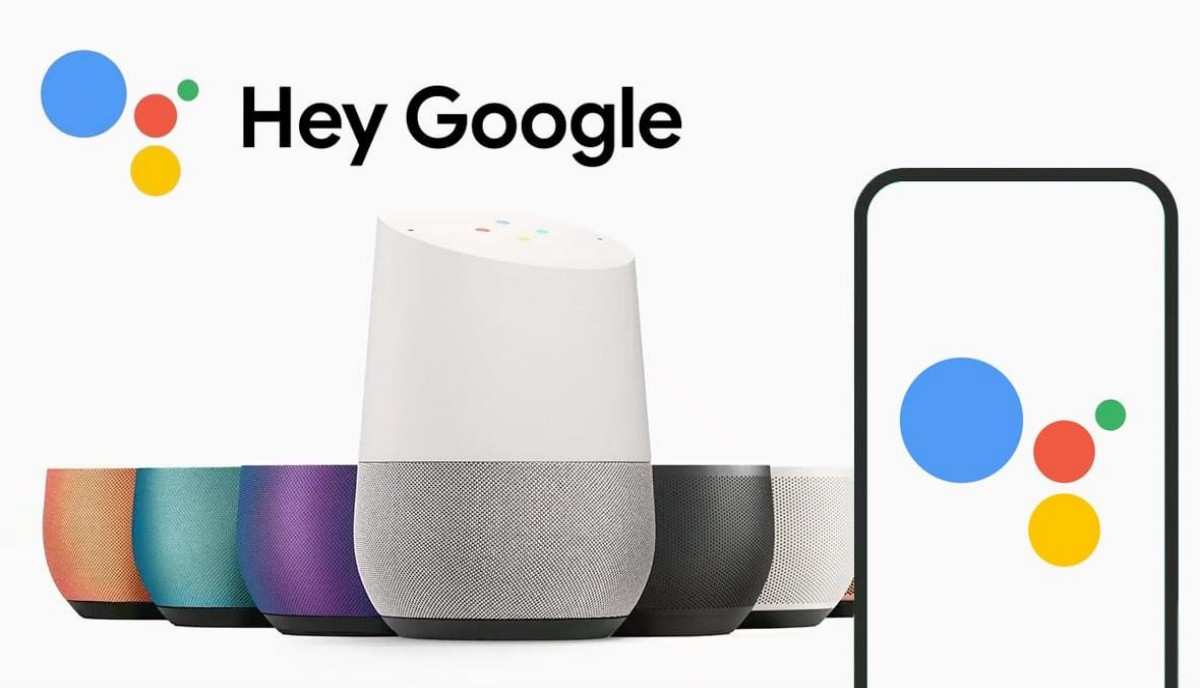
Powerful Ecosystem Integration: Connects to smart home devices for voice control of lights, music, etc.
1 / 3About Google LLC
Google LLC is a leading global technology company focused on the development and innovation of internet search, artificial intelligence, cloud computing, and digital services, dedicated to making information access more efficient and intelligent.
Clicking “Visit Official Site” takes you to Google Assistant's website. Pricing and features may have changed since this review was published.
Discussion(0 comments)
No comments yet. Be the first to share your thoughts!
You Might Also Like
More Voice AI tools worth your time

ElevenLabs Review 2026: The Best AI Voice Generator?
ElevenLabs has dominated AI voice generation since 2023. With new competitors emerging, we test whether it still deserves its crown in 2026.

PlayHT Review 2026: Ultra-Realistic AI Voices for Podcasters
PlayHT 3.0 claims to have the most realistic AI voices on the market. We put it head-to-head with ElevenLabs to find out which is better for podcast production.
Murf AI Review 2026: The Best AI Voice Generator for Business
Murf AI is designed for business use cases — presentations, e-learning, and corporate videos. We test whether its studio-quality voices justify the premium price.