ChatGPT Voice Review: Finally, an AI Conversation Tool That Feels Human
For years, artificial intelligence has been striving to make its voice sound more natural, but most voice assistants still come across as machines reading from a script. That is, until the arrival of ChatGPT Voice—a feature that takes conversational AI to a whole new level, making it feel as though you’re actually talking to a real person. Gone are the stiff, terse, robotic replies and awkward pauses. ChatGPT Voice delivers a fluid and natural conversational experience, emotionally nuanced inton
OpenAI
ChatGPT Voice is an AI voice interaction feature that a...
A Voice Assistant That Truly Understands "Conversation"
When most users experience ChatGPT’s voice feature for the first time, the very first thing they notice is the natural, fluid rhythm of the conversation. Traditional voice assistants often pause for too long before answering questions or abruptly interrupt the user mid-sentence. In contrast, ChatGPT’s voice feature demonstrates astonishing fluidity when handling scenarios involving user interruptions, conversational pauses, and follow-up inquiries. You can suddenly switch topics in the middle of a sentence, naturally correct your own phrasing, or pose complex, layered questions without needing to restart the conversation from scratch. This interactive experience feels less like navigating through a menu system disguised as a dialogue, and more like genuinely conversing with another human being. This seamless, effortless interaction is powered by the same underlying large language model technology that drives OpenAI’s text-based AI; however, once the mode shifts to voice interaction, the emotional impact of the experience undergoes a profound transformation.
It elevates AI from being merely a "tool" operated by humans to a "partner" characterized by greater collaboration and interactivity. Many voice assistants tend to treat each user query as an isolated event, forcing users to repeatedly restate information they have already mentioned. In contrast, ChatGPT’s voice feature excels at maintaining conversational coherence. If you mention a specific topic early in the conversation, the assistant can typically reference and contextualize it in subsequent exchanges without requiring you to provide additional explanations. This makes brainstorming sessions, study exercises, and creative workshops significantly more productive. The voice quality itself also represents a monumental leap forward. The assistant’s voice no longer sounds stiff or overly synthesized; instead, it features natural pacing, emotional nuance, and subtle shifts in intonation. While it has not yet fully replicated the experience of human conversation, it has significantly narrowed the gap, making the overall experience far more immersive than that of previous generations of voice AI systems.
Why the ChatGPT Voice Experience Is So Distinctive
Most voice assistants are, at their core, merely "task-execution machines." Typically, you only ask them to check the weather, set timers, plot routes, or play music. While ChatGPT’s voice feature is certainly capable of handling these basic interactive tasks, its true strength lies elsewhere: in deep, extended, and reflective conversation. It is precisely in this regard that the platform begins to distinguish itself from traditional competitors. For instance, you can discuss story ideas with it, explore philosophical concepts, practice interview questions, or even simulate real-life conversations in a foreign language. This AI adapts to the natural flow and rhythm of the interaction, rather than simply engaging in mechanical keyword matching. Students can utilize it to simplify complex or obscure concepts; content creators can leverage it for hands-free brainstorming; and professionals can use it to organize their thoughts while multitasking. In many respects, the success of ChatGPT’s voice feature stems from its ability to transcend the realm of mere "utility," venturing instead into the expansive domains of "companionship, creativity, and collaboration."
One particularly astonishing aspect lies in the remarkable flexibility of its tone. Users can request the assistant to articulate a concept in a manner that is relaxed and casual, professional and rigorous, humorous and witty—or even charged with dramatic tension. This exceptional adaptability ensures that the conversational experience remains neither dull nor repetitive, even over extended periods of interaction. You will no longer encounter generic, "canned" standard responses; instead, the assistant dynamically adjusts its communication style based on the specific context and the user's intent. The integration of multimodal capabilities adds yet another profound dimension to the user experience. In versions that support this feature, users can combine voice interactions with functions such as image recognition, document analysis, or real-time problem-solving. Imagine this scenario: while conversing with the AI via voice, you simply point your phone's camera at a challenging math problem, a foreign-language menu, or a baffling appliance control panel—and the AI simultaneously identifies and interprets the content. It is precisely this fusion of multimodal capabilities that elevates ChatGPT Voice far beyond the scope of a simple chatbot, transforming it into an intelligent assistant capable of simultaneously interpreting multiple forms of information.
Unexpectedly Entertaining
One of the most surprising features of ChatGPT Voice is its entertainment value. Many people initially turn to it to boost their productivity, yet end up spending hours experimenting with various conversations simply because the mode of interaction is so engaging. Users can have it role-play as fantasy characters, debate hypothetical scenarios, tell stories, mimic teaching styles, or craft impromptu adventures. This experience often feels like a blend of gaming, improvisational theater, and interactive storytelling. This entertaining quality gives ChatGPT Voice an edge over traditional assistants. Most AI tools tend to be either practical or entertaining; ChatGPT Voice, however, often manages to be both. You might start out simply using it to schedule your day, only to suddenly find yourself discussing film theory, designing fictional worlds, or practicing stand-up comedy. The fluid interplay between utility and entertainment creates a sense of unpredictability that keeps the conversation feeling fresh and engaging.
The voice system's capacity for emotional responsiveness also significantly enhances the sense of immersion. Although it does not possess genuine emotions, its skillful modulation of pace and tone renders interactions warmer and more expressive than those with typical machine voices. This subtle sense of realism makes storytelling, language practice, and everyday conversation particularly engaging. For many users, the appeal lies not merely in *what* the AI says, but in the natural fluidity with which it speaks. Gamers and content creators, in particular, may appreciate this feature's capacity for improvisation. Dungeon Masters can verbally brainstorm campaign scenarios; writers can use it to test out dialogue concepts; and streamers can experiment with audience interaction. Because the system's responses are dynamic rather than following a preset script, the experience of each session is unique. This element of unpredictability aligns perfectly with the allure of sandbox games—genres where the act of creation itself becomes an integral part of the entertainment.
Is ChatGPT Voice Still Worth Using in 2026?
Looking ahead to 2026, AI voice interaction is poised to become one of the most fiercely contested technological arenas; yet, ChatGPT Voice remains one of the clearest visions of the future of digital communication. Its success lies not in perfectly mimicking humans, but rather in eliminating enough friction from AI conversations to make conversing with software feel—at long last—natural and fluid. This distinction may seem trivial in theory, but in practice, it has fundamentally transformed the user experience. For efficiency-minded users, ChatGPT Voice serves as a brainstorming partner, a learning aid, a translation assistant, and a hands-free research tool. For casual users, it becomes a source of entertainment and experimentation. And for creators, students, and professionals, it acts as an ever-ready conversational collaborator. Few modern applications have managed to blend utility and interactivity so effectively.
Keyboards and touchscreens may still be important, but conversational interaction is increasingly becoming the next major phase in the evolution of everyday computing. ChatGPT Voice demonstrates that voice AI is no longer limited to simple commands; rather, it can serve as a flexible communication platform across fields such as work, creativity, education, and entertainment. Even so, users should approach this technology with a pragmatic mindset. While impressive, ChatGPT Voice is not without its flaws. It may misinterpret context, provide inaccurate information, or express undue confidence in uncertain answers. Privacy concerns also remain an integral part of the broader discourse surrounding voice AI systems. Any user who utilizes the platform extensively should be aware of how their conversational data may be processed and stored. Despite these limitations, ChatGPT Voice remains one of the most compelling consumer AI experiences available today.
ChatGPT Voice — Interface Screenshots
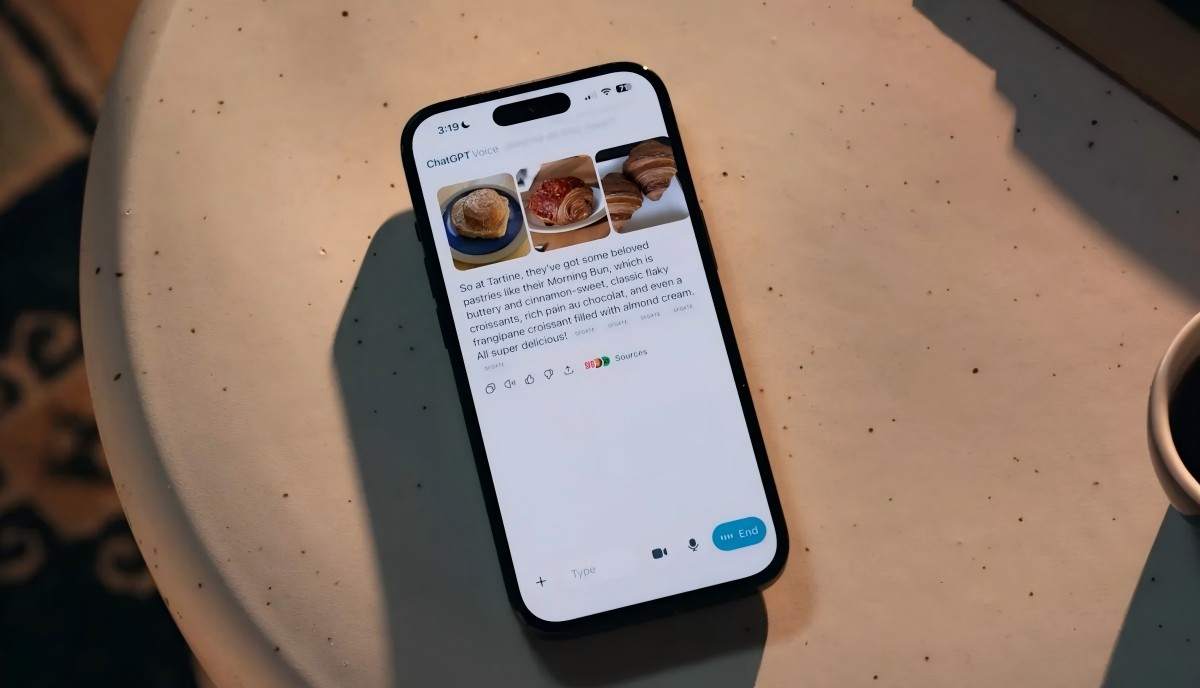
Voice mode integrated into the chat window.
1 / 4About OpenAI
ChatGPT Voice is an AI voice interaction feature that allows users to engage in real-time, natural conversations with ChatGPT using their voice.
Clicking “Visit Official Site” takes you to ChatGPT Voice's website. Pricing and features may have changed since this review was published.
Discussion(0 comments)
No comments yet. Be the first to share your thoughts!
You Might Also Like
More Voice AI tools worth your time

ElevenLabs Review 2026: The Best AI Voice Generator?
ElevenLabs has dominated AI voice generation since 2023. With new competitors emerging, we test whether it still deserves its crown in 2026.
PlayHT Review 2026: Ultra-Realistic AI Voices for Podcasters
PlayHT 3.0 claims to have the most realistic AI voices on the market. We put it head-to-head with ElevenLabs to find out which is better for podcast production.
Murf AI Review 2026: The Best AI Voice Generator for Business
Murf AI is designed for business use cases — presentations, e-learning, and corporate videos. We test whether its studio-quality voices justify the premium price.